
Trinidad & Tobago’s 2026 World Cup Journey: A Tough Ending With Lessons Ahead
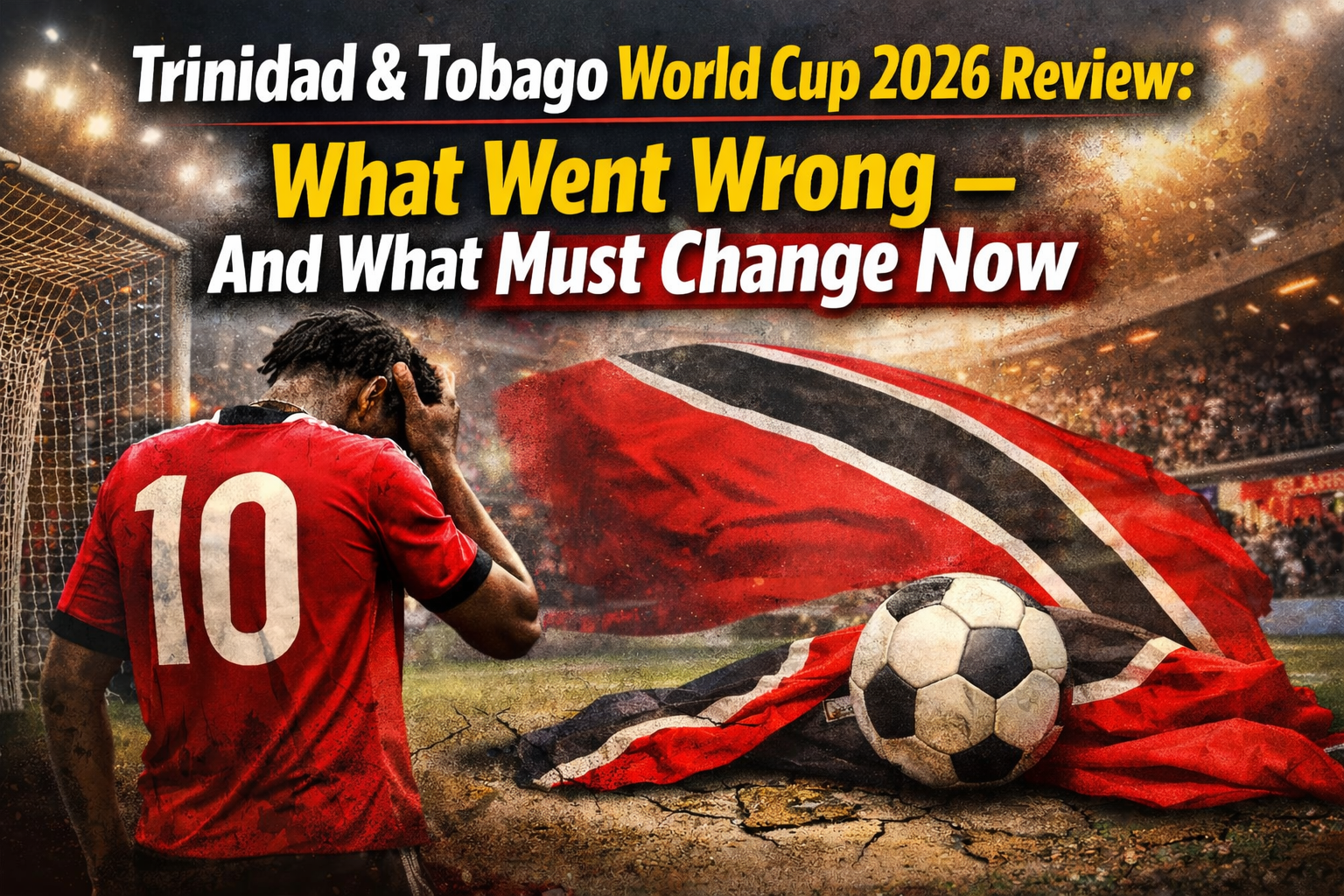
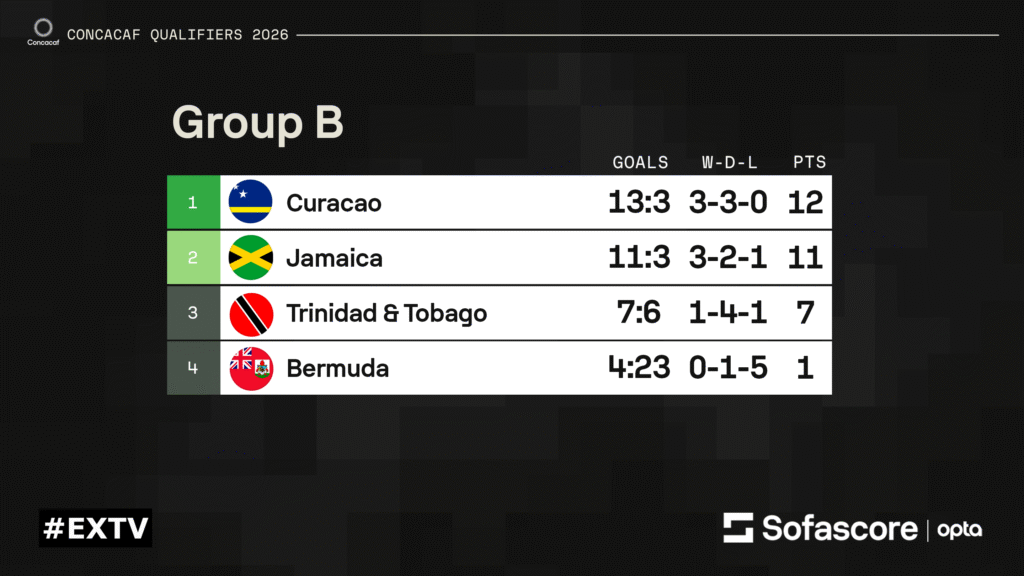
Trinidad & Tobago’s bid for the 2026 FIFA World Cup ended after a 1–1 draw at home to Jamaica. The Soca Warriors finished 3rd in Group B with:
- Pld 6 – W 1 – D 4 – L 1 – GD +1 – 7 pts
Final standings:
- Curaçao – 12 pts
- Jamaica – 11 pts
- Trinidad & Tobago – 7 pts
- Bermuda – 1 pt
The story of this campaign: competitive performances, improved structure under Dwight Yorke, but too many draws and not enough cutting edge in key moments.
Coaching Review: Angus Eve vs Dwight Yorke
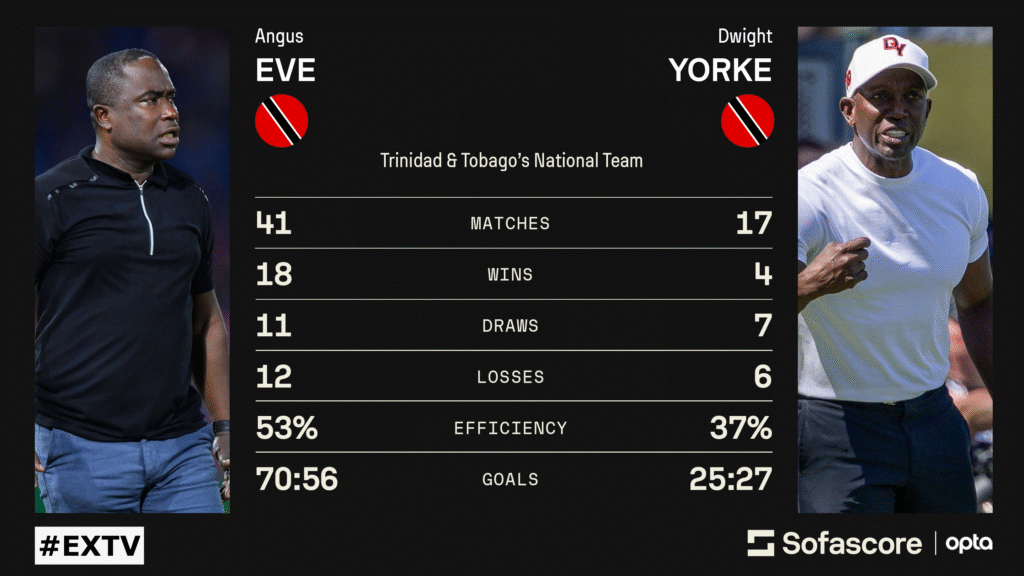
Angus Eve (2021–2024)
- Stabilised the national team during a difficult financial and administrative period.
- Gold Cup results exposed defensive weakness against top Concacaf nations.
- A costly 2–2 draw vs Grenada early in the 2026 cycle set the campaign back.
- Ultimately relieved of duties before the final qualifying round.
Dwight Yorke (2024–Present)
- Brought improved tactical organisation and better home performances.
- Secured strong draws home and away vs Curaçao and a 3–0 win at Bermuda.
- Dominated Jamaica statistically at home (possession, shots, passing) but lacked ruthless finishing.
- Showed progress but recorded just one win in six matches—too few to advance.
Standout Players & The Future Core
Key Leaders
- Levi García – Main attacking threat and creative engine.
- Kevin Molino – Veteran influence, pivotal late equaliser vs Jamaica.
- Andre Rampersad – Midfield anchor offering control and balance.
- Denzil Smith – Reliable first-choice goalkeeper during qualifiers.
Emerging Talent
- Tyrese Spicer – Created big chances, dynamic attacking outlet.
- Dante Sealy – Important creative role in Yorke’s tactical system.
- Roald Mitchell – Promising debutant who nearly delivered a decisive moment vs Jamaica.
- Kobi Henry – Young defender trusted in multiple formations.
- Nathaniel James – Energetic forward offering pace and movement.
This core forms the foundation of a more modern, attack-minded Trinidad & Tobago team.
Tactical Strengths & Weaknesses
Strengths
- More structured defensive performances compared to previous cycles.
- Improved possession and chance creation, especially vs Jamaica.
- Flexible tactical setups (4-4-2, 3-4-3) tailored to opponents.
Weaknesses
- Finishing issues: converting dominance into goals remains a major weakness.
- Slow starts in key matches left the team chasing the group leaders.
- Pressure moments exposed a lack of composure in must-win situations.
TTFA, Governance & Wider Structural Issues
The campaign unfolded alongside major administrative changes:
- Transition from FIFA’s normalisation committee to a newly elected TTFA executive.
- Significant debts and governance reforms affected long-term high-performance planning.
- Improvements such as better league alignment and new sponsorships began, but real structural stability remains a work in progress.
- The organisation has not adapted to modern marketing standards, limiting its ability to reach the full national audience.
The national team’s performance is closely linked to administrative consistency. Years of instability reduced the competitive edge needed to qualify.
What Trinidad & Tobago Must Do Now
Tactical & Technical Priorities
- Dedicated finishing programmes for attackers.
- A clear national playing philosophy used across all age groups.
- Deepen defensive options and improve late-game management.
Sports Science & Physical Development
- Better injury prevention and load monitoring.
- Physical benchmarking against top Concacaf teams.
Coaching & Player Pathway
- Maintain staff continuity under Yorke.
- Establish a unified coaching curriculum across TTPFL, youth teams, and TTFA.
- Strengthen SSFL → TTPFL → national team pathways.
Administrative Reforms
- Transparent budgeting and increased investment in high-performance departments.
- Formal high-performance unit for data analysis, scouting, and sports science.
- Continued scheduling cooperation between TTPFL and the national team.
Regional Competitiveness
- Treat Gold Cup and Nations League campaigns as preparation for the next World Cup cycle.
- Set measurable targets for goals scored, conceded, and youth minutes.
Marketing
- The organisation has not adapted to modern marketing standards, limiting its ability to reach the full national audience.
- T&T football still relies heavily on outdated communication methods, missing opportunities on platforms where younger fans actually live (TikTok, IG Reels, YouTube Shorts). If done, it is executed poorly.
- Without a modern, data-driven digital strategy, the national team struggles to build the emotional connection and national pride that fuels successful football cultures.
- This is most evident when games are not crucial World Cup qualifiers; the drop-off in attendance is very significant.
Conclusion
Trinidad & Tobago’s failure to qualify for the 2026 World Cup was not due to one factor but a combination of:
- Missed chances in winnable games
- Long-standing governance instability
- Tactical evolution still in progress
- A young squad still finding its identity
However, the performances under Dwight Yorke demonstrate real progress. With structural reforms, investment in finishing and sports science, and a clear footballing identity, this setback can become the platform for a stronger push in the next cycle.